Collections
Ancient Period Replicas
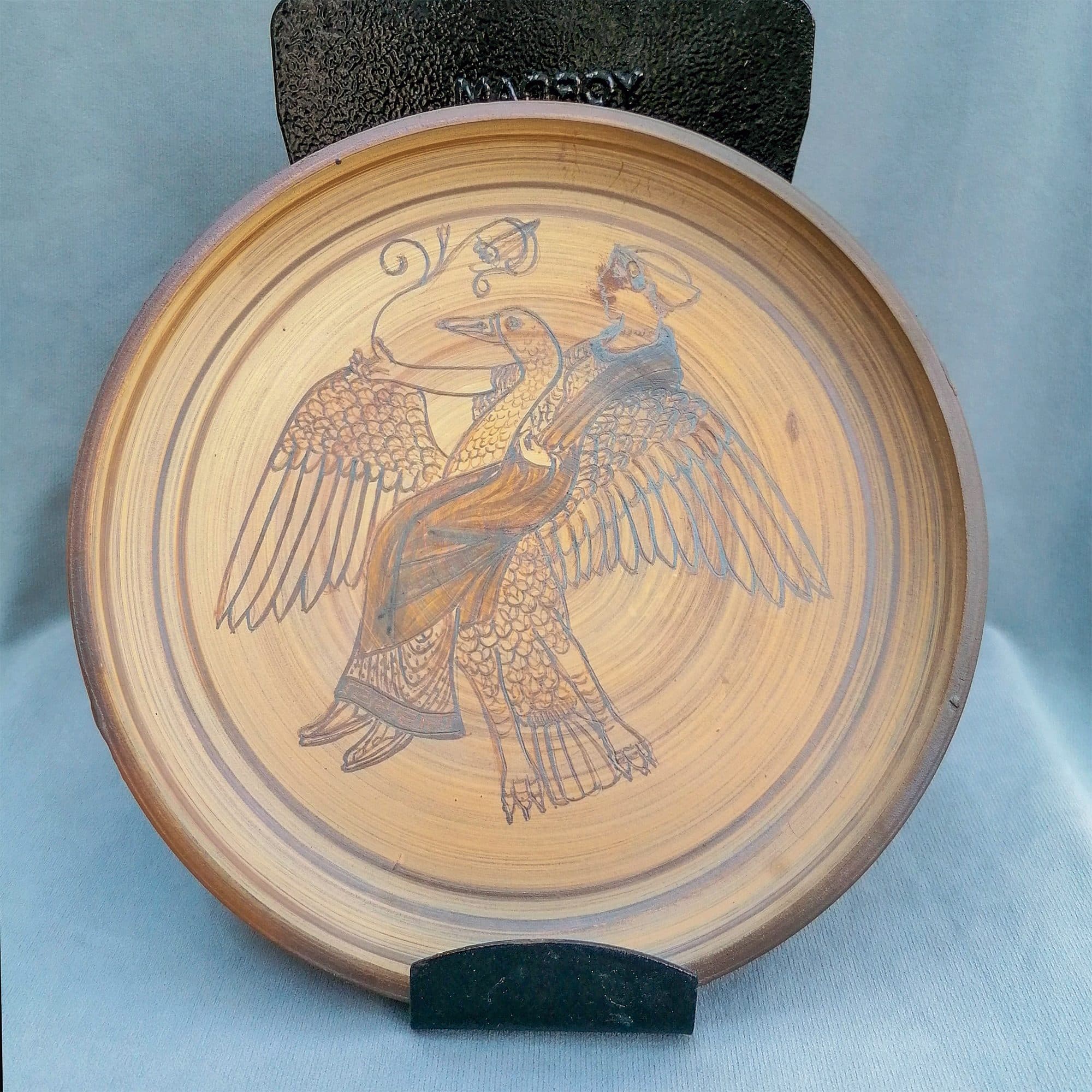
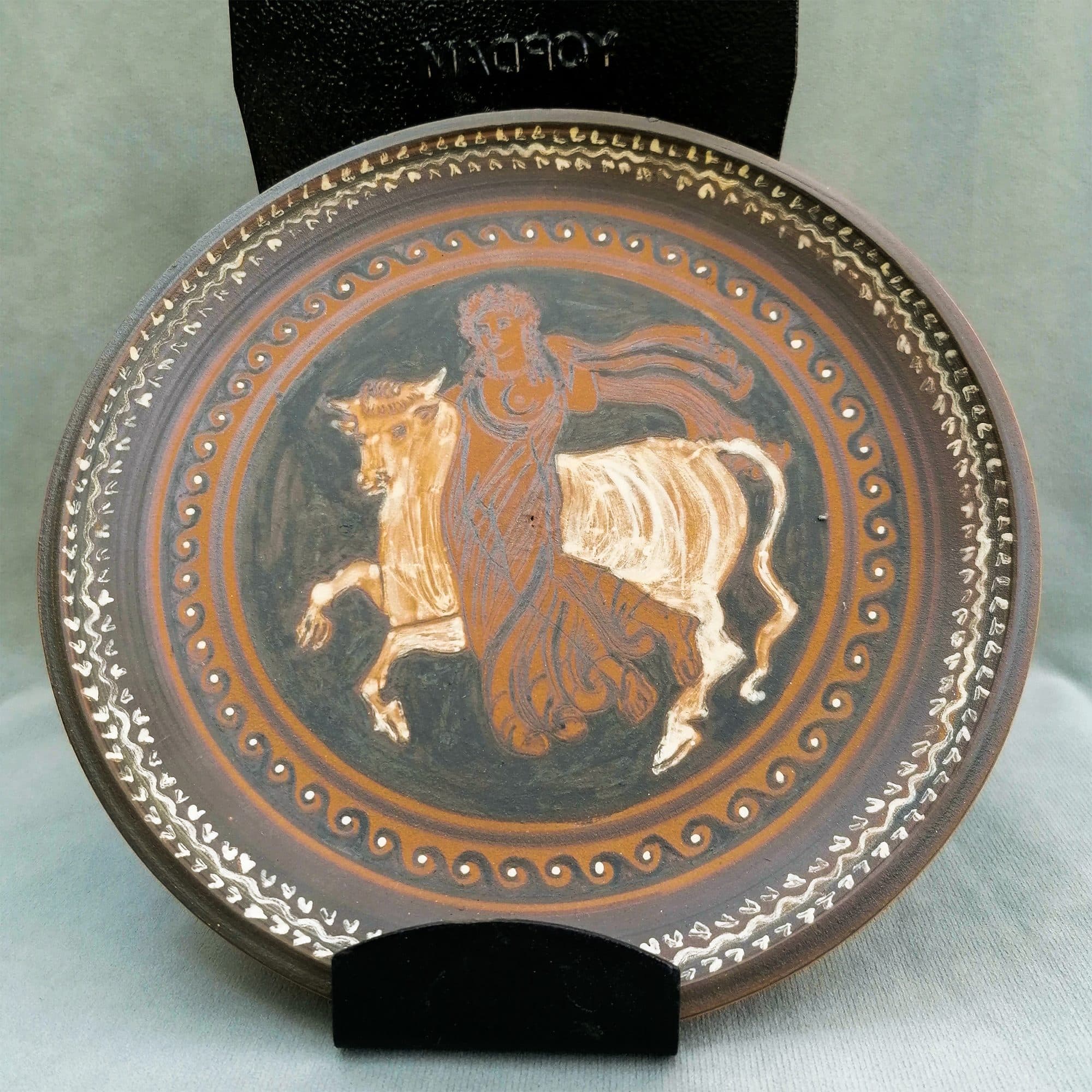
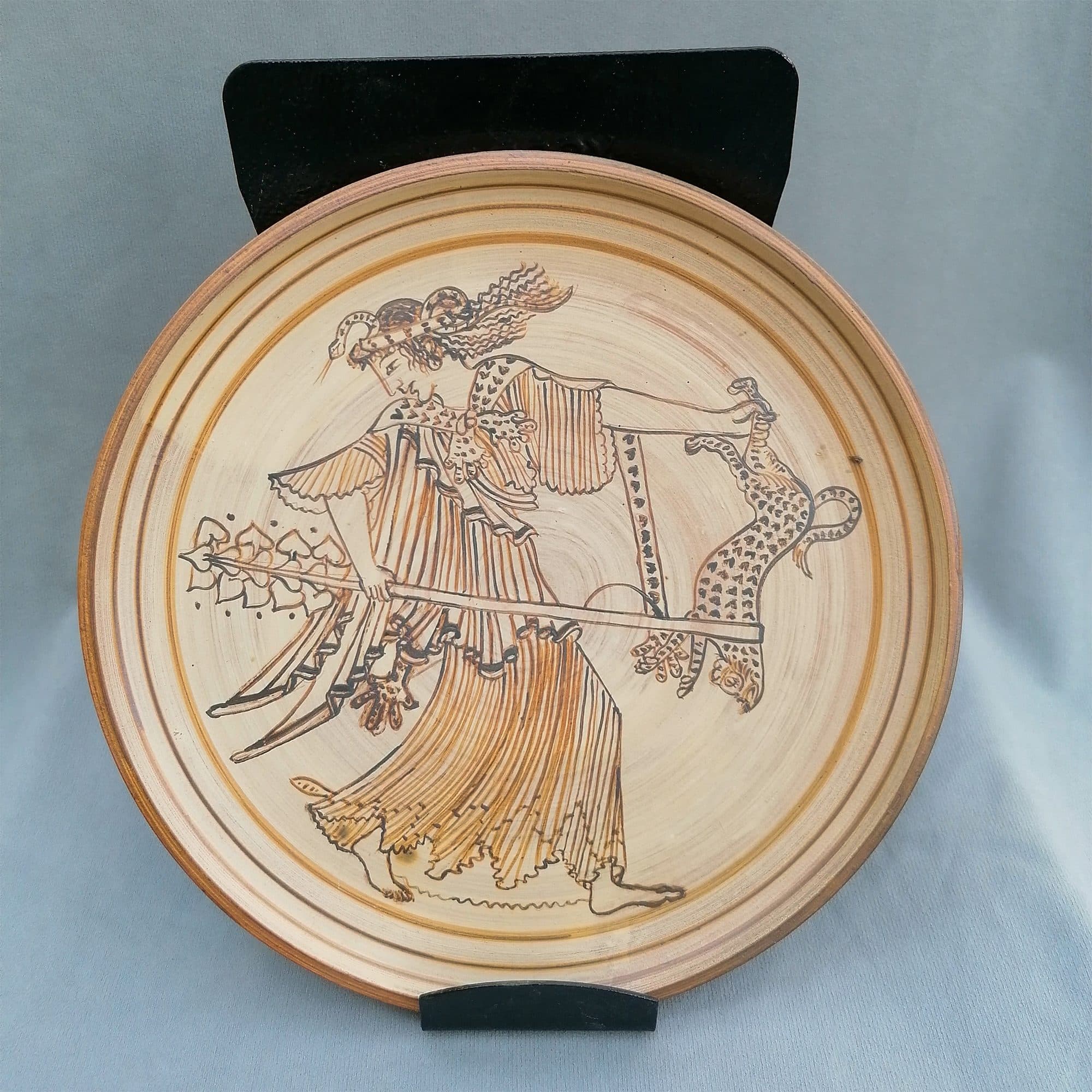
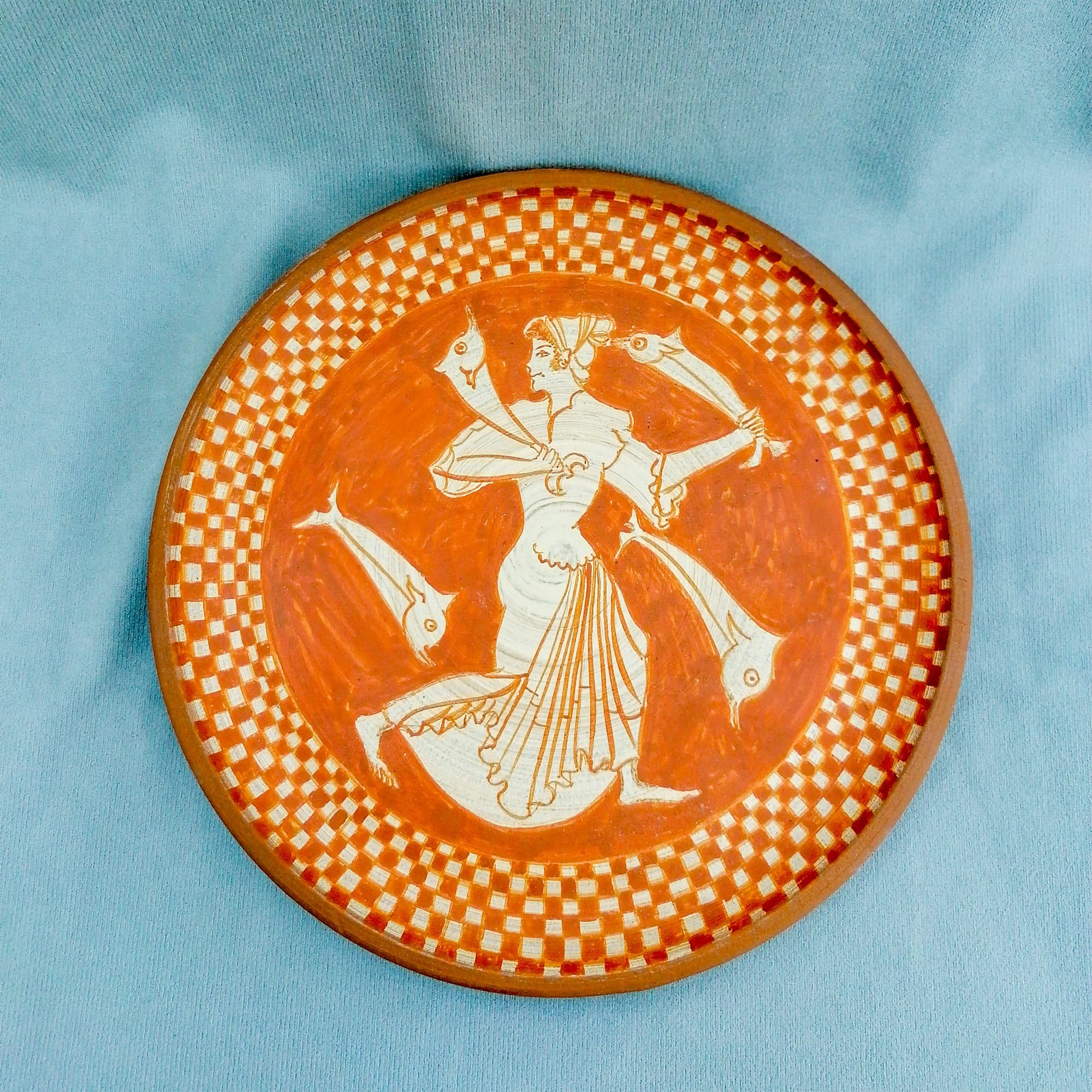
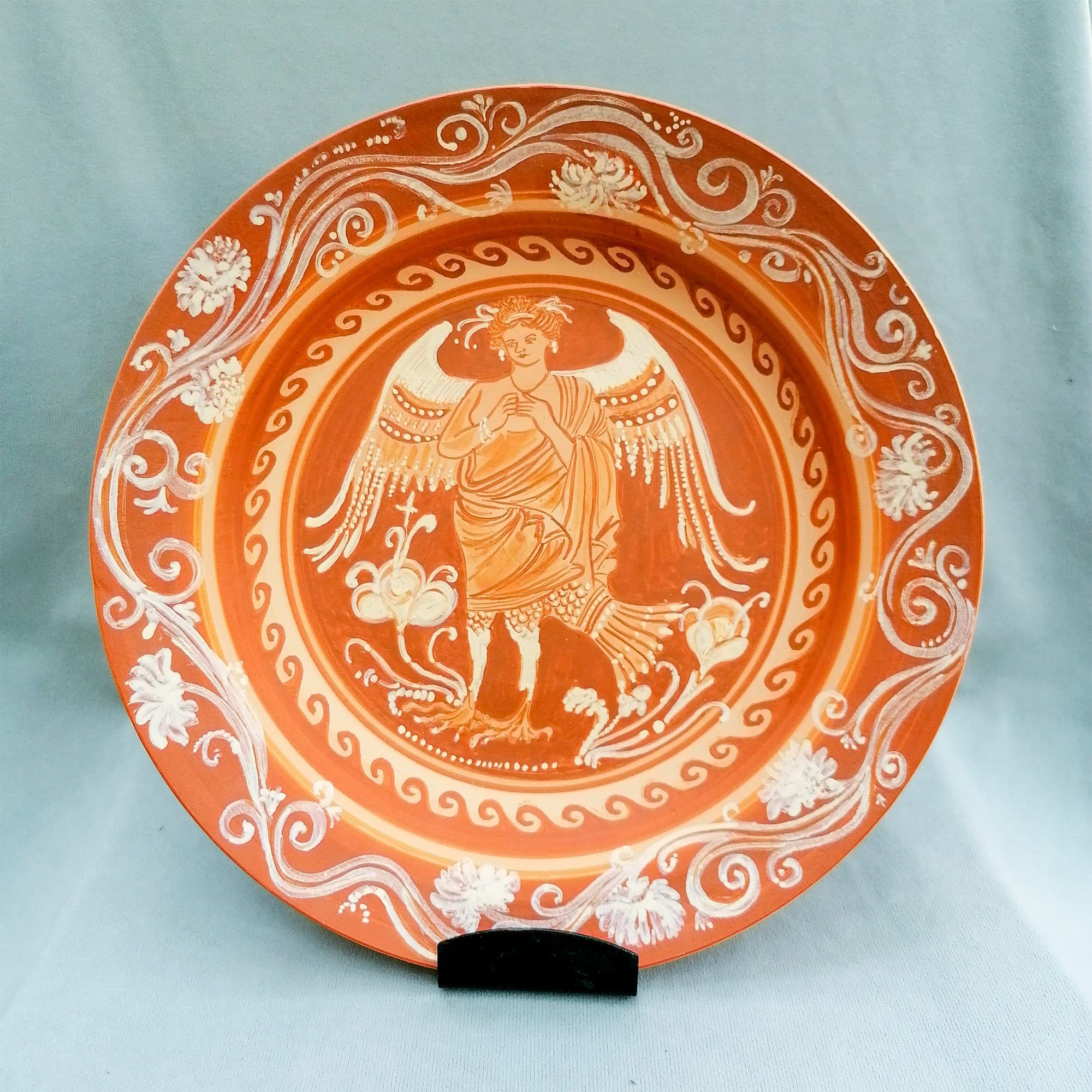
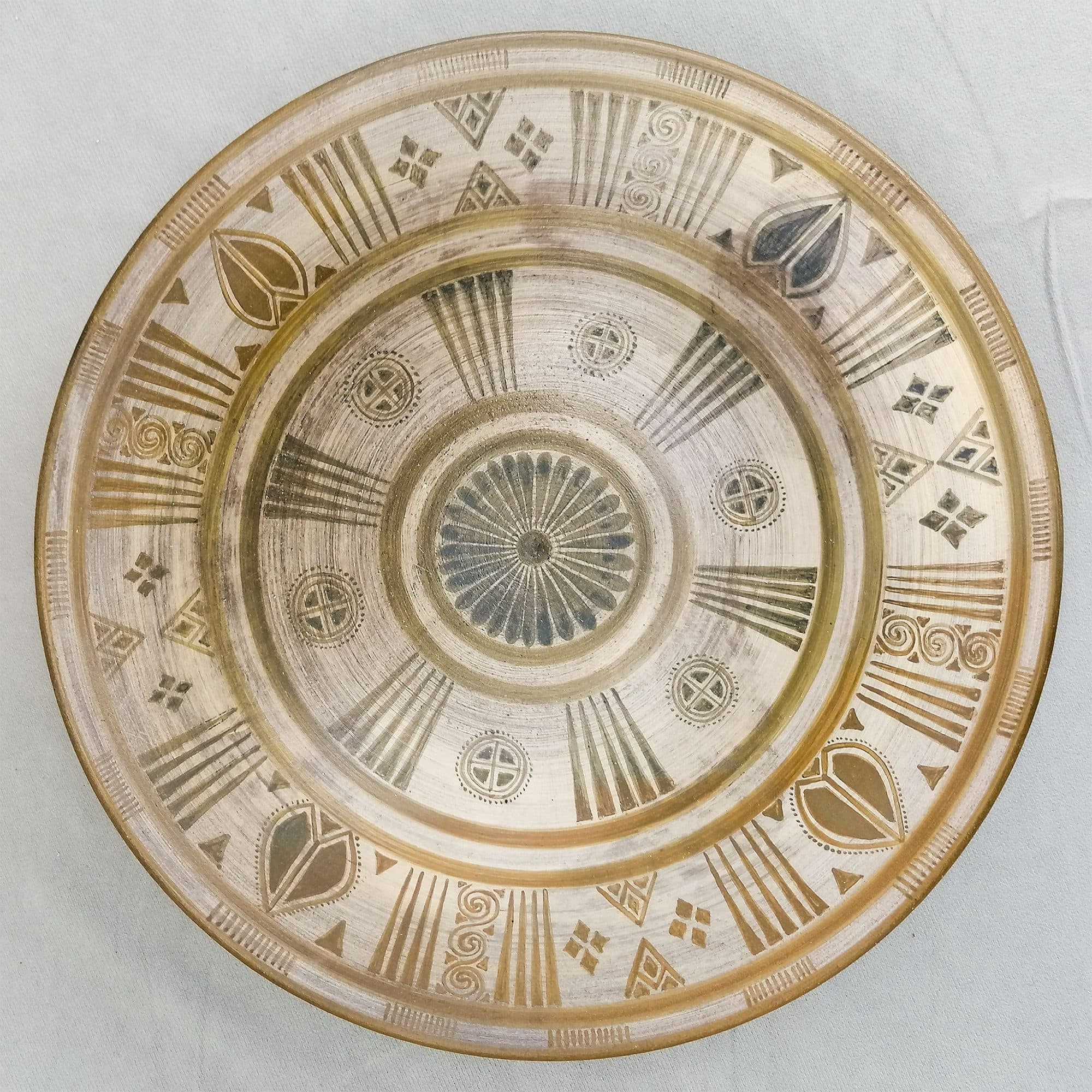
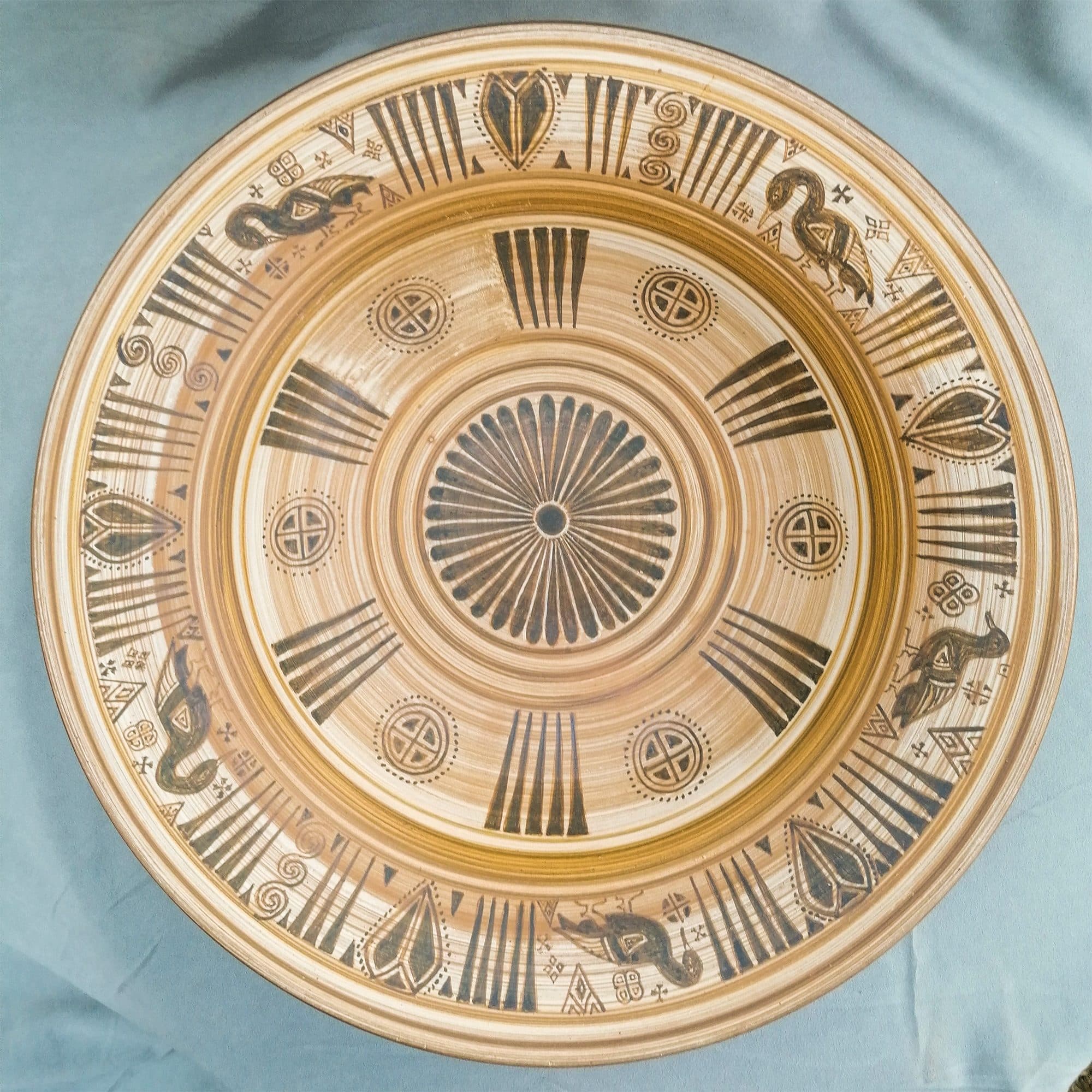
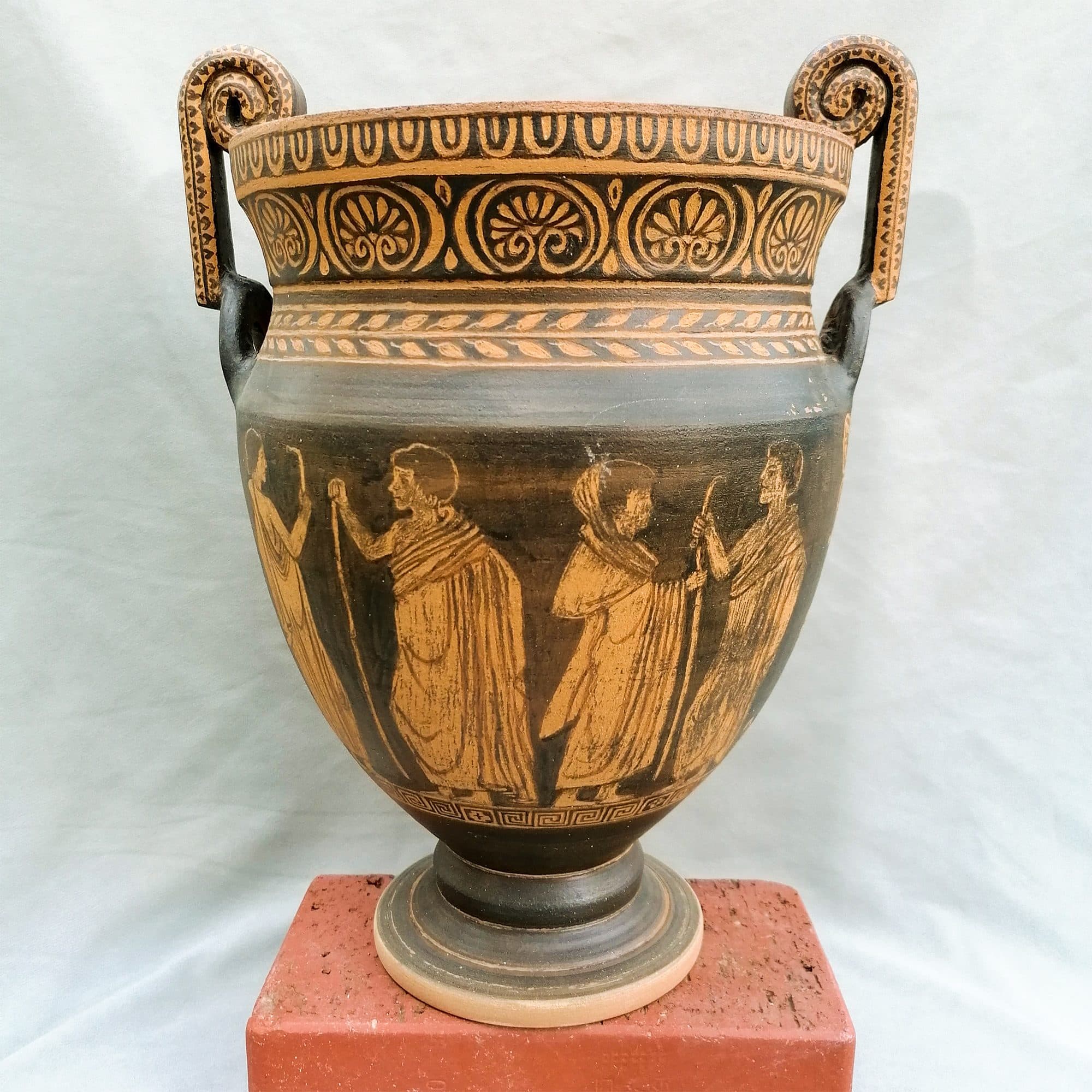
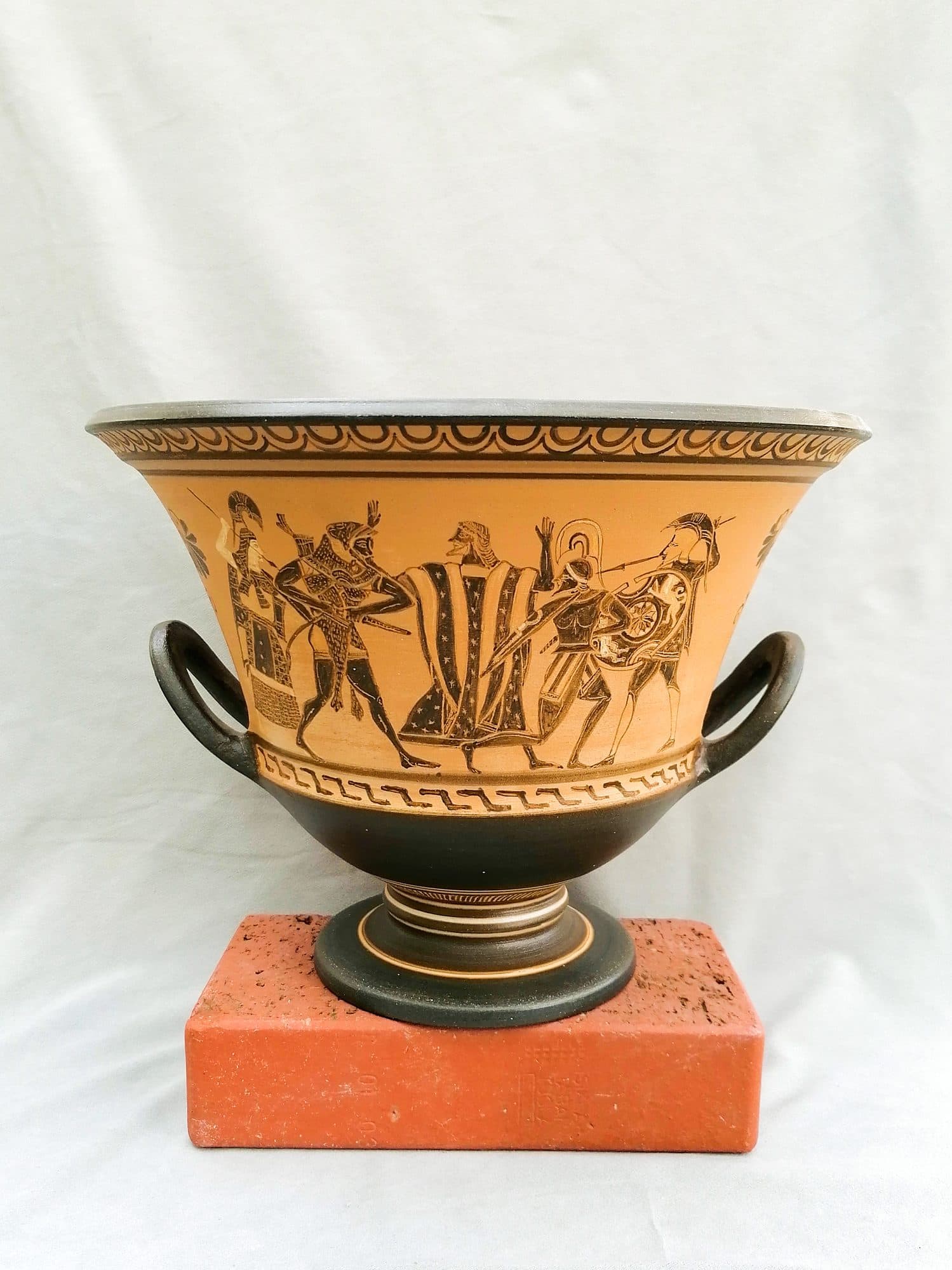
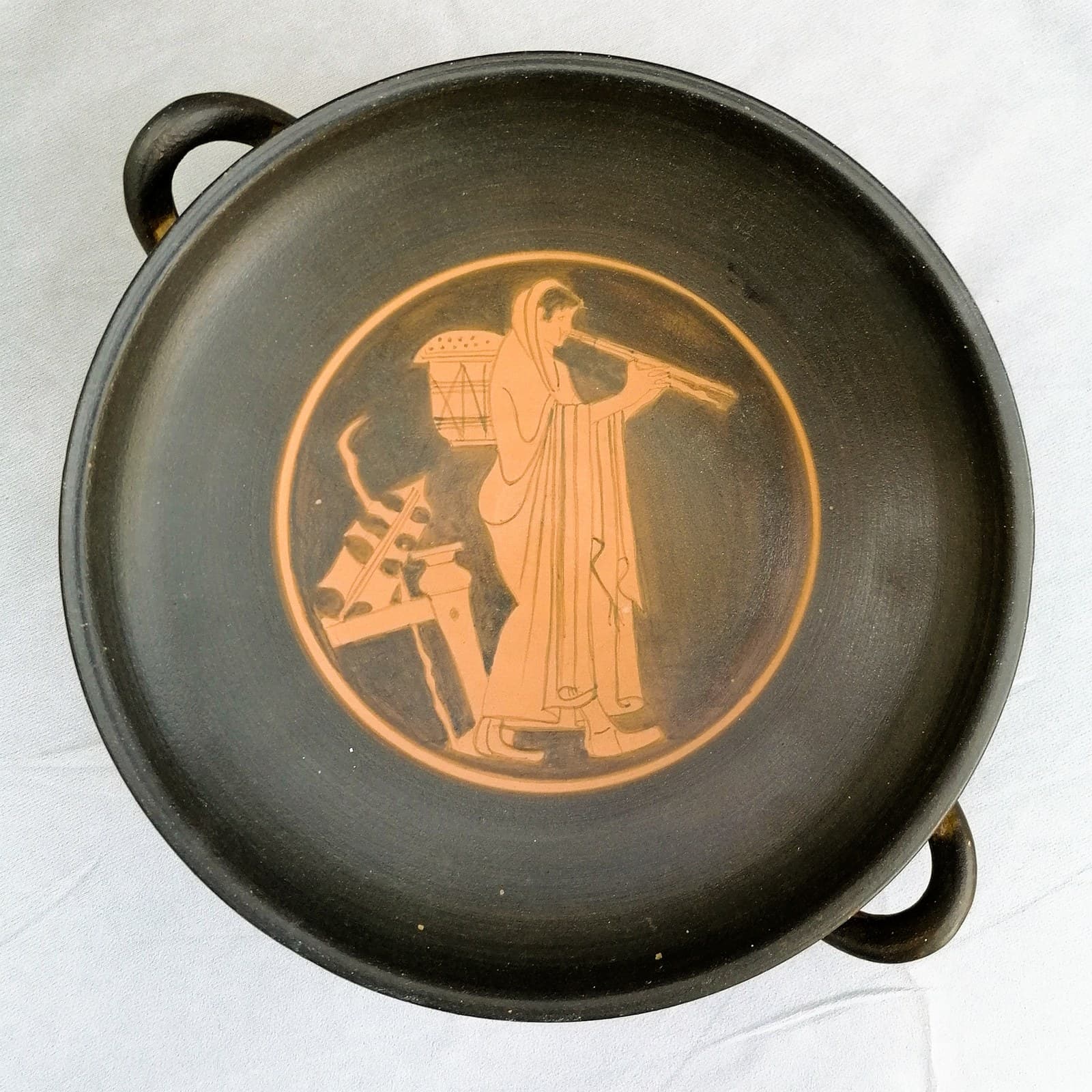
These ancient-period replicas were made by two artists: the form is the work of Şeref Doğan, and the painting upon it belongs to Melike. In keeping with the tradition of that period, the painter and the master who shaped the form on the potter's wheel were separate people; we too worked in accordance with this tradition.
Technique
The Memory of Clay: Terra Sigillata
Terra sigillata means "sealed earth" in Latin. In ceramic art, however, the term refers to a natural, lustrous slip obtained from the very finest particles of clay.
Applied to the ceramic surface, this fine clay suspension gives a velvety, smooth and slightly lustrous appearance. Because it creates an aesthetic effect without forming a glazed surface, it has remained one of the significant surface techniques from Antiquity to the present day.
How Is Terra Sigillata Prepared?
Terra sigillata is obtained by settling a fine-grained clay in water. The preparation generally consists of these stages: the clay is mixed with water in certain proportions. Deflocculants such as sodium silicate or soda ash are added so that the clay particles separate. The mixture is left to rest for several days. While the heavier particles settle to the bottom, the finest clay particles remain in suspension in the upper portion. This upper layer is carefully drawn off to obtain the terra sigillata slip. Once applied, the surface can be burnished while half-dry with a stone or a soft cloth to increase its natural lustre.
Terra Sigillata in Antiquity
The origins of the terra sigillata technique reach back to Antiquity. The fine slip applications first seen on ancient Greek pottery later underwent considerable development in the Roman period.
The glossy red tablewares produced during the Roman Empire in particular are known in archaeology today as Terra Sigillata ceramics. These vessels are recognised by their fine workmanship, lustrous surfaces and frequently mould-made relief decoration.
In Greek pottery a comparable understanding of surface appears where the fine clay slips used on black-figure and red-figure vases turn a lustrous black through a controlled atmosphere during firing. This technique is one of the most important aesthetic characteristics of ancient ceramic art.
How I Apply This Technique
The works in this collection are the product of a long-running study into the form, proportion and decorative language of ancient Greek pottery.
For each piece the forms are thrown on the wheel. Original ancient examples are studied and redrawn, a fine terra sigillata slip is applied, the surface decoration is worked by hand, and the piece is completed through controlled firing processes.
My aim is not merely to produce a likeness of the ancient works, but to restore their aesthetic language, surface character and expressive power for a contemporary viewer.
For this reason every replica is part both of a historical enquiry and of a contemporary ceramic practice.
From Ancient Ceramics to the Present
While preserving the formal and iconographic heritage of ancient Greek ceramic art, this collection also constitutes an enquiry into how traditional ceramic techniques can be kept alive today.
Each work is the result of an interdisciplinary process bringing together mythology, art history and ceramic technology.